
The fate of EUDR hangs in the balance, as further votes to delay an extra year move forward
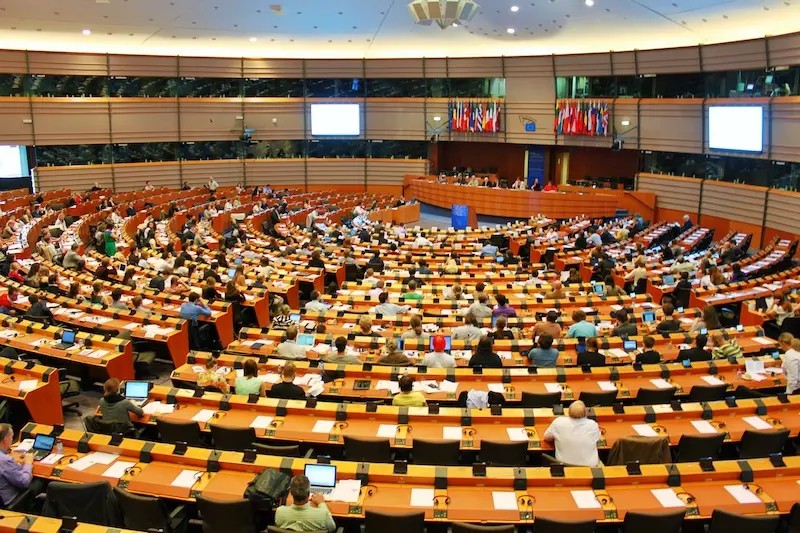
The European Parliament. pic: Shutterstock
Travelling to Brussels this week for the Caobisco annual meeting, it was clear that events in the Belgian capital have been finely balanced surrounding the major EUDR regulations.
But few could have anticipated the major shift that has happened with regards to the EU Commission’s recommended position of ploughing ahead in putting the frameworks in place from next month would be rejected by the EU Council yesterday in a stunning about-face.
The move leaves the whole process effectively in limbo, with yet another vote on it being conducted by the European Parliament just before Christmas – which is supposed to traditionally at least feel like a time of good will to all, but that seems in incredibly short supply with European political circles as far as the EUDR is concerned.
Why is this all so significant? Put simply, it’s the environmental plight of our planet that is on the line – and this much-lauded legislation had promised to be a beacon for legislators around the world in holding industry to account for its part in deforestation, as well as setting legally binding standards for guaranteeing zero tree-felling within firms’ direct supply chains.
It was good to hear from Caobisco this week that there is optimism surrounding gaining agreement for it to be finally dealt with – but it appears there is also a sense that an additional year’s delay seems a near inevitability, which is something that many in the sector had been hoping would not come to pass at all.
Indeed, the vast majority of companies have entirely recognised its worth, including the likes of Mars, Ferrero, Tony’s Chocolonely and Nestle, who banded together this past week to make a combined plea in ‘not stopping the clocks’ for yet further delay that is likely only to weaken, or completely wreck any sense of credibility that the plan had in the first place.
The EU Commission has not helped itself here, after one of its ministers asserted that yes, an extra year delay on top of the already agreed year’s setback was likely due to the state of its IT infrastructure to oversee the scheme. But that excuse wears thin when you consider that they have in fact had at least two or three years to deal with this since the proposals were initially agreed. So it was something of a surprise that it retreated from that position to declare that it was in fact going to advise the European Parliament to press ahead with the plans as of next month, just allowing for a six month grace period to deal with technical hitches.
But that appears to have been rejected by the EU Council, which has argued that the impact on businesses is going to be severe, and that companies need further time to adapt, as well as the tech that manages it all. We’ve heard these lines many times before – and as observers have noted. Any further delays may well not solve any outstanding issues, and simply reward the inaction of those who either don’t want any form of regulation, or want to put it at bay for as long as possible. In the final analysis, this sorry situation is particularly concerning, for as many environmental groups and industry bodies have noted, the planet does have extra time to offer up in clamping down on deforestation, so the need to resolve this is more pressing than ever.
Neill Barston, editor, Confectionery Production
- Keep in touch at [email protected] or via social media @confectionprod or our Linkedin channels