The art of chocolate
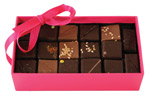
I think the word ‘artisanal’ has been over used and often abused. The implication of artisan in the chocolate world is that the product is hand made. What does this really mean? It implies that all the products are made using only the hand skills of a chocolate craftsman – without the use of a machine. Legally, you can use the term even if you are merely positioning a nut or cherry or a swirl of the dipping fork on top of the chocolate as it emerges from the enrobing machine. What a delusion! To makes chocolates, by which I mean bons bons, pralines, truffles, rather than the chocolate itself, by hand is a hugely laborious and to produce the quality and quantity to make a business successful and profitable is barely feasible.
It takes great skill to produce the quality of chocolates that the best chocolate makers produce today. That skill takes some perfecting and practice and most of the best chocolate makers have crafted those skills for some 10–15 years. It takes perseverance, practice and passion in lorry loads. This applies to those who make chocolate from the bean too. It is a very serious, time and money intensive business. Working with the suppliers of the best quality product, ie the cacao farmers is a wholly different culture and that needs expertise and patience to get it right.
However, for a realistic business case, it is very difficult to temper large batches of couverture require for enrobing and it takes ‘hours’. Likewise dipping is a long labour of love (I know – over the years I have given myself truffle elbow – like tennis elbow – from hand dipping hundreds of thousands of truffles). Thus I think we can safely permit the use of a tempering and an enrobing machine and still be prepared to consider the product as artisan or hand made.
For the past decade, the skills of a handful of talented and inspired young individuals have been pushing the boundaries and combined to make a difference to the way we look at chocolate in the UK. William Curley, Paul a Young, Damian Allsop, Bill McCarrick, Gerard Coleman of l’Artisan du Chocolate and Louise and Andrew Nason of Melt and Marc Demarquette have joined Chantal Coady, long time exponent of fine chocolate, as part of the London chocolate scene. Shelly Preston of Boutique Aromatique, Claire Gallagher at Betty’s in York, Claire and Andy Burnet at Chococo in Dorset, Paul Wayne Gregory and Iain Burnett in the Highlands of Scotland have dramatically changed the complex nature of the chocolate scene in the UK.
Angus Thirlwell at Hotel Chocolat has revolutionised the high street, offering its customers a whole range of chocolate and chocolate products and its own cacao plantation in St Lucia with its purpose built chocolate factory with reference to its pedigree; while Thorntons is also embracing this chocolate renaissance. The UK is now also able to boast its own bean to bar man Willie Harcourt Cooze who owns a plantation in Venezuela. Duffy is also a newcomer to the scene and won the Academy of Chocolate Newcomer Award 2011 using cacao from Honduras in his prize winning product.
Among those at the forefront of this British revival are William Curley and Paul a Young. Together with a group of other like minded chocolate lovers including Chantal Coady, William Curley, Chloe Doutre Roussel (legendary chocolate buyer of Fortnums at the time), Sarah Jane Evans MW and myself, the Academy of Chocolate was founded in 2005 to promote a greater awareness of the difference between fine chocolate and mass produced chocolate confectionery and to encourage consumers to ‘look beyond the label’.
While sales of all chocolate have increased and the appreciation of proper chocolate has grown there is still a long way to go. With so many more questions being asked by the consumer as his or her knowledge grows, it is more important than ever that chocolate must be about quality. Never under estimate the importance of sourcing each and every one of the ingredients and look globally for the right flavours. Discover where the cocoa originates and don’t be obsessed with just high percentages of cocoa mass or cocoa solids as it is also known.
There are a number of companies around the world who are taking the consumer’s new knowledge seriously. Winners of the Academy of Chocolate’s Awards are clear evidence of this. They include Amedei from Italy; Amano from the US; Valrhona, the French company that has led the way on so many chocolate issues; Domori from Italy and Cluizel from France, to name a few.
Not all of us enjoy the same highs and lows – there is no accounting for taste it is subjective but quality is indisputable. We should know about the travails and plight of the cacao farmers and be curious about the beans, their journey from farm to factory and the complicated processes involved in turning the beans into bars – for this is what chocolate is about.
Today ‘real’ chocolate commands a strong market with consumers seeming mostly at ease with the price of true chocolate and the understanding the skills of the chocolate maker. The best chocolate is often expensive – but here old adage that ‘less is more’ could never be truer with chocolate. For many of us, chocolate has come of age –so let’s celebrate, embrace and be thankful.
By Sara Jayne Stanes OBE, chairman of the Academy of Chocolate
Topics
artisan award bar bean buyer chairman cocoa confectionery consumer factory Features ingredients joined market nut OBE price products quality range sales sourcing taste truffles
Organisationsacademy of chocolate Hotel Chocolat thorntons
Regions