
Chewing gum for children
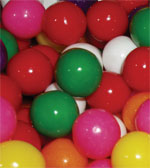
The small segment of the gum category devoted to products specifically targeting children aged 5-12 offers a decidedly more limited range of innovative products. Some of the most attention getting launches (eg layered products, flavour changing products, so-called ‘dessert’ flavours) do not transition into ‘for kids’ products. Indeed, while new flavours abound in the market in general, products positioned specifically for children have a much more limited range.
Because one of their main positionings is ‘breath freshening,’ it is not surprising that gum flavours concentrate heavily on mint variations, including peppermint and spearmint. In childrens’ products, however, fruity flavours are generally more popular than minty ones.
Since gum for children is more likely to be presented as a treat or a snack, not a breath freshener, there is less reliance on flavours that are traditionally associated with a breath freshening function. Instead, childrens’ gum flavours tend towards sweet notes, or the ever popular and unspecified ‘sour,’ a concept that is more of a sensation than a flavour, and that has a strong following in kids’ confectionery products.
While gum products positioned specifically for children make up a small part of the overall category, children themselves are not an insubstantial user group. In the US, for example, 83 per cent of households with kids use gum, while in the UK 85 per cent of parents are willing to give their children sweets (including gum).
Among parents, gum has a certain reputation. There is a fear that children may choke on the product, or that they may swallow it and do themselves harm. Many of the parenting blogs and advice columns caution against giving gum to young children, suggesting that children must first be ‘trained’ to spit it out. There is also the issue of choosing between sugar free gum, which is not harmful to teeth but contains artificial sweeteners, and regular gum, which contains sugar and therefore can cause cavities, but which does not contain the artificial sweeteners that parents would prefer not to give to their kids.
Nonetheless, there is a market for the product. In the UK, for example, just over a third of children aged 8-16 chew gum, while 23 per cent ‘are not allowed’ to eat it. Among those who chew gum, half are allowed to choose their own, while 26 per cent depend on their parents to buy it, suggesting that there is more of a market for creative gum products for kids than is currently being exploited. Beyond products chosen by or for kids, there is also an unquantifiable percentage of gum products that are purchased by and primarily for parents, but end up being shared with children. Such is the nature of ‘pester power,’ a strong marketing tool wielded by children in the modern family.
Marketers could leverage the parent-child market by innovating around products that would please both groups. Packaging that encourages sharing but have separate ‘parent’ and ‘child’ products could broaden the scope of flavours and presentations that could then stand on their own as kids’ products, for example. There is also room to expand concepts that are successful in adult products, such as ‘dessert flavours’ for kids or layered products that comprise flavours and textures that children prefer.
By Marcia Mogelonsky, global food analyst at Mintel, focuses on chewing gum products aimed at children